
The Taub Standard Two Iconic Winemakers, Two Iconic Regions
One of the most compelling things about California is its sheer diversity of expression.
Just beyond the ridge of the Mayacamas Mountains, two of the state’s most storied appellations, Napa Valley and Sonoma County, produce wines of entirely different character from soils and climates only a few miles apart. That contrast is precisely what has drawn the Taub family deeper into both territories, and what fuels the philosophy behind every bottle: California's greatest wines are made by the right person, in the right place, with the right grape.
“There is so much richness here,” says third-generation proprietor Marc Taub. “All the many microclimates, special sites, soil types, and winemaking philosophies … it’s a thrill and an honor to share our version of wines from Napa and Sonoma with fellow enthusiasts.”
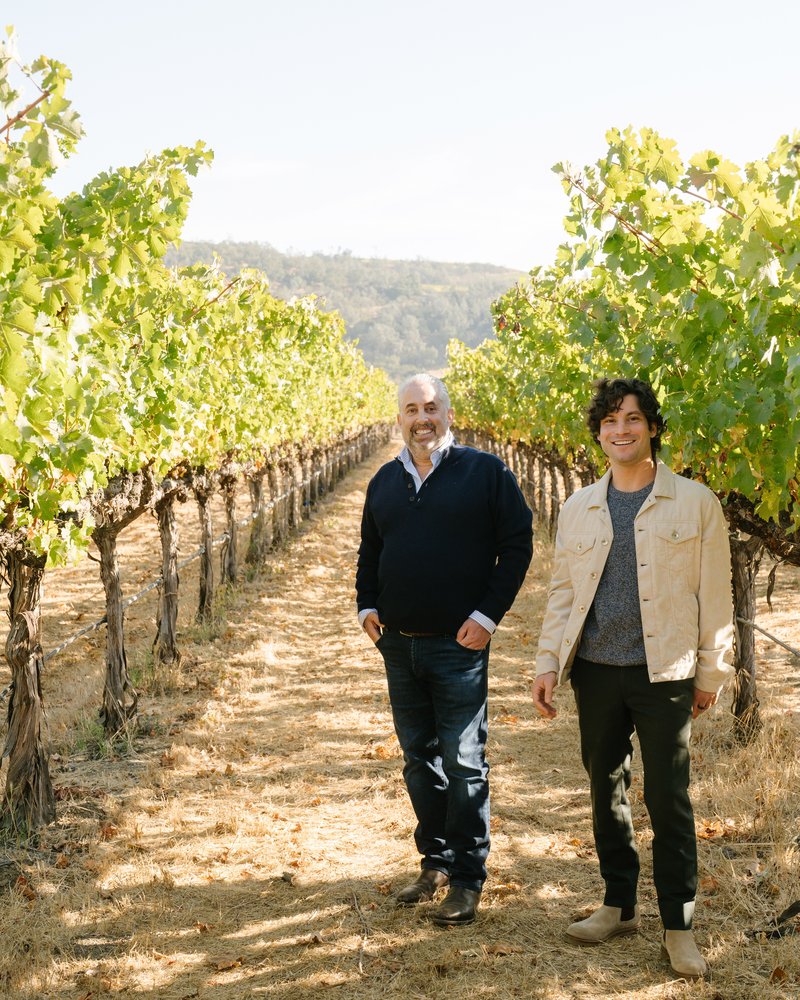
The Taub family’s relationship with fine wine spans nearly a century. After watching his father and grandfather introduce American drinkers to Italian Pinot Grigio in the 1970s, Marc set his sights on California. Today, he and his children, Jake and Chloe, are forging ahead in some of the state’s most celebrated growing regions with a very clear vision.
One Standard, Two Masters, Two Regions
The Taubs' Napa chapter began in 2013, when the family partnered with legendary grower Andy Beckstoffer to launch a Cabernet Sauvignon program rooted in heritage sites across Rutherford, Oakville, and Mount Veeder. Sonoma followed less than a decade later in 2022 when the family reunited with their friend David Ramey. (Twenty years ago, David, in a highly unusual move, donned his consulting winemaker cap for the Taubs' Mendocino property, Saracina.) Through David, the Taubs gained rare access to old-vine fruit from the Martinelli family, launching Taub Chardonnay.
Today, Taub represents some of the most hallowed ground in both regions. In Napa, the Beckstoffer Vineyard Georges III and Beckstoffer Missouri Hopper Vineyard sit alongside fruit from across Napa Valley. In Sonoma, the Martinelli family’s Charles Ranch Vineyard in Fort Ross-Seaview and prized Russian River Valley fruit anchor the Chardonnay portion of the house.
“These wines are our purest expressions of this extraordinary territory,” says Marc. “And for us, it’s only the beginning of what’s possible here.”
-
Founded
2013 -
Location
Napa Valley & Sonoma County, California, United States of America -
Follow On
The Winemaker's Winemaker
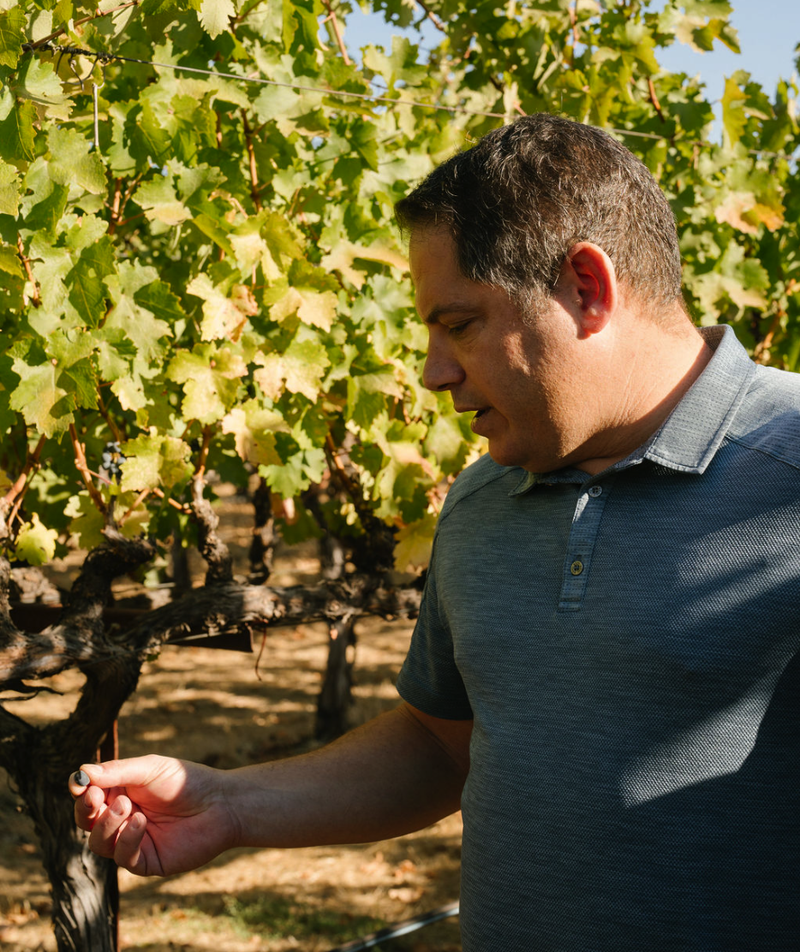
Maayan Koschitzky, architect of Taub’s Cabernet Sauvignons, brings a farmer’s instinct and an engineer’s precision to the cellar. Born into a farming family in Israel, he made wine there for several years before heading to Napa Valley in 2011, where he cut his teeth at Screaming Eagle and Dalla Valle. In 2014, winemaker Philippe Melka brought him on as assistant winemaker at Atelier Melka; two years later, Koschitzky was named director of winemaking, a role in which he now oversees an enviable roster of Napa’s top estates. In 2019, Wine Enthusiast named him one of its “40 Under 40” tastemakers.
A Deeper Exploration of Napa Valley
Most Napa houses plant a flag in one place. The Taubs planted a question: what does the valley say when you listen to all of it?
Napa Valley is not one place. It is an ever-evolving conversation between geology, elevation, and microclimate that plays out across more than a dozen distinct AVAs … each with its own character, tempo, and argument for what Cabernet Sauvignon can be.
While most producers choose a single corner of that conversation to call home, the Taub family knows Napa has so much more to say.
Working with Maayan across the mosaic of Napa’s most distinctive soils — from the volcanic ash of the mountain AVAs to the alluvial benchlands of the valley floor — the Taub approach to Cabernet is an ongoing exploration, where the voice of each vineyard source can be clearly heard in every vintage expression.
Breaking out of the single terroir narrative, Taub is a premier house for fine Napa Cab, built to discover, express, and honor the full range of what this small but marvelous valley can produce.
Less Hand, More Land
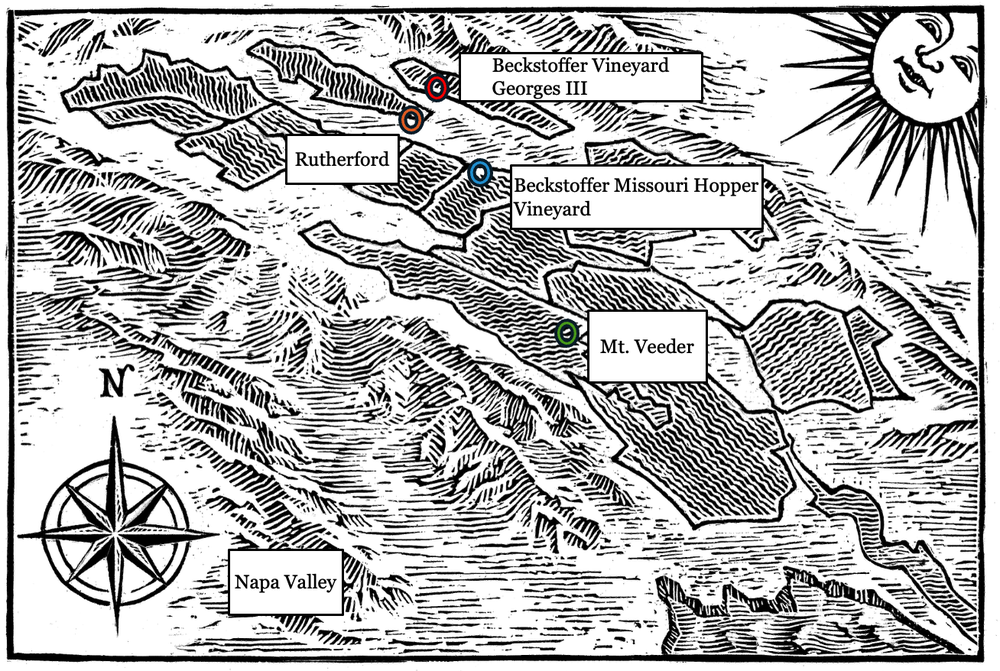
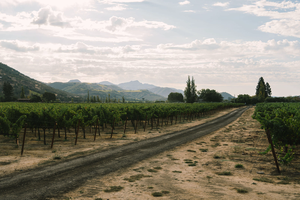
The fruit for Taub comes from a deliberately varied set of sites, each chosen to showcase a different facet of the valley. On the Rutherford Bench (a narrow, three-mile alluvial fan at the base of the Mayacamas), deep and rocky soils of moderate fertility produce Cabernet Sauvignon with the polish and dusty, cocoa-tinged tannin for which the appellation is famous. It's here that two of Andy Beckstoffer's most storied parcels are drawn into the conversation: Beckstoffer Vineyard Georges III, planted on the Rutherford Bench itself, and Beckstoffer Missouri Hopper Vineyard, prized for its concentration and structure.
Up in the mountains, the profile shifts. Mount Veeder, the southernmost and coolest of Napa's mountain AVAs, forces Cabernet to work for every ounce of ripeness, resulting in wines with firmer tannin and a more savory, mineral-driven core. Its thin, nutrient-poor soils naturally limit yields and concentrate flavor, a sharp contrast to the fertile valley floor below.
The winemaking approach favors precision over intervention, letting each vineyard's character lead. Grapes are picked at night, in the coolest part of the day, and begin a natural, slow, and deliberate fermentation. Once at the winery, they're hand-sorted and fermented separately, block by block, in small, open-top micro-fermenters that allow for gentle extraction and maniacal tannin management.
The Cabernets then age 18 to 20 months across a selection of eight world-class French cooperages, with the percentage of new wood calibrated site by site so the oak remains a subtle supporting element of the fruit. Regular barrel tasting and blending trials keep each wine true to its vineyard of origin, and at the blending table, every drop auditions for its place. The result is a style built on elegance, balance, and freshness.
Power in Partnership
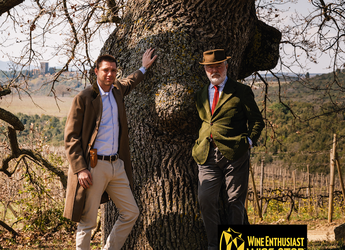
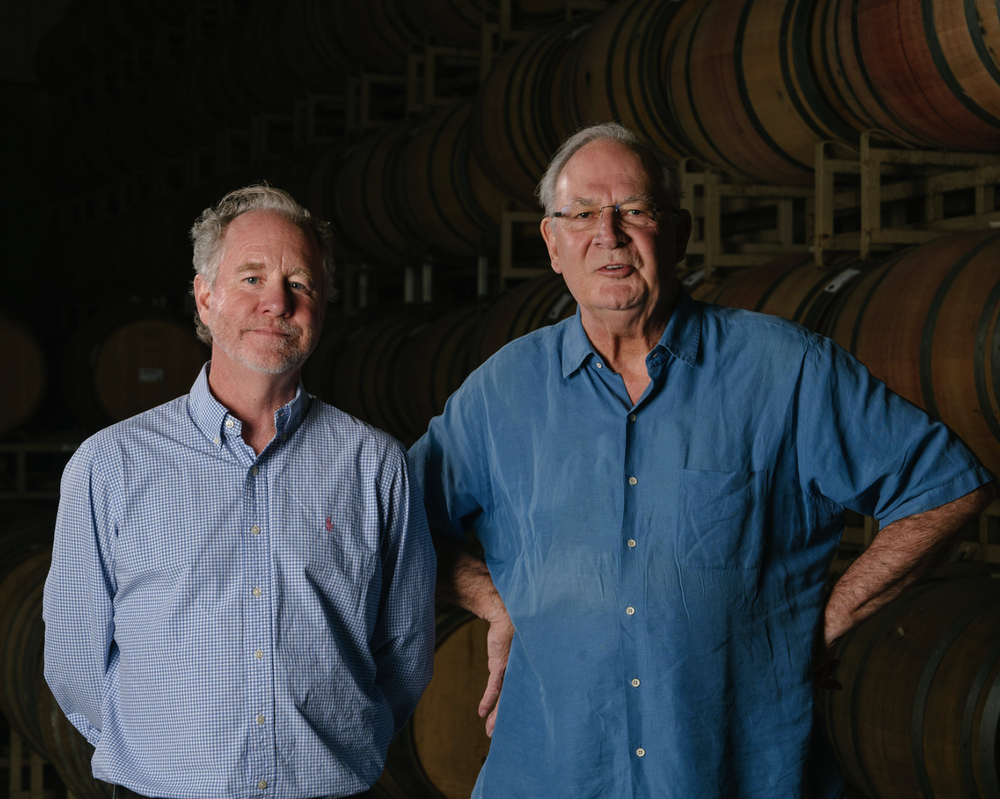
Hailed as “Professor Chardonnay” by Wine Spectator, David Ramey has spent five decades shaping how American winemakers approach white wine. After earning his enology degree from UC Davis in 1979, he apprenticed in Bordeaux at Château Pétrus under the Moueix family before returning to California, where he held winemaking posts at Simi, Matanzas Creek, Chalk Hill, Dominus, and Rudd Estate. Along the way, he pioneered techniques now considered standard practice, including whole-cluster pressing of white grapes, native yeast fermentation, and barrel-aging Chardonnay on its lees without filtration.
Alex MacGregor’s path to winemaking wound through a Toronto restaurant before it ever touched a vineyard. After earning a business degree from McGill University, he tended bar at a spot known for one of the city’s most ambitious wine programs, and caught the bug. He went on to earn his sommelier certification, worked alongside one of Canada's few Masters of Wine at the time, and spent a year traveling the wine regions of France, Spain, New Zealand, and Australia before trading the dining room for the cellar. MacGregor moved to California to study enology and viticulture at UC Davis, landed his first winemaking job in Dry Creek Valley, and in 2001 joined Saracina Vineyards in Mendocino as its founding winemaker, working the estate's debut vintage alongside a young David Ramey. He has led Saracina’s winemaking program for more than two decades and, in 2022, reunited with Ramey and the Taub family to help shape the Sonoma side of the Taub portfolio.
The Exploration Continues in Sonoma
On the Sonoma side of the Mayacamas, the Taubs asked the same question of a very different, but equally diverse region: what happens when you listen to many places at once, and let each one keep its own voice?
Across 19 AVAs that stretch from the foothills westward to the jagged coast, Sonoma is a cacophony of soils and climactic extremes. Taub's Sonoma wines draw from two of the county's most compelling districts: Russian River Valley, where fog rolls in through the Petaluma Gap each evening and retreats by late morning, and Fort Ross-Seaview, a rugged, high-elevation appellation perched above the fog line along the Sonoma Coast.
Again, in a shift from the solitary to something more transcendent, the Taub house for fine Sonoma Chardonnay is built to discover, express, and honor the full range of what this incredible region can do.
Less Hand, More Land
Taub's Sonoma Chardonnay is sourced from two distinct expressions of the Martinelli family's vineyards.
Charles Ranch Vineyard sits within Fort Ross-Seaview, a Sonoma Coast sub-appellation that is by all accounts difficult to farm, thanks to its remoteness, elevation, and extreme coastal wind exposure. The region's altitude is crucial to the identity of the wines grown here, so much so that AVA rules require vines to be planted above roughly 920 feet, high enough to escape the fog layer entirely and gain long sunshine hours moderated by bracing sea breezes. The result is fruit with riper character balanced by persistent, racy acidity.
Down in Russian River Valley, sandy clay loam soils and nightly fog moderate the heat of the growing season, allowing for a slower ripening curve that builds complexity without sacrificing freshness. Farmed by a multitude of family farmers who've worked this land for generations, the vineyards here are blessed with cool morning fog and free-draining, river-carved alluvial soils, giving the fruit time to develop real depth without losing its edge.
Grapes are whole-cluster pressed to preserve delicacy and minimize harsh phenolics, then fermented in neutral and small portions of new French oak barrels using native yeasts. Malolactic fermentation happens right in barrel, and the wine rests on its lees for an extended period, with regular stirring, or bâtonnage, to build a creamy, layered mouthfeel.
It's Burgundian technique, applied to California's finest fruit.
Every wine is bottled unfiltered, and aging generally runs 14-20 months in a mix of new and neutral French oak, calibrated so the wood adds depth without masking the vineyards' character. It's this combination of old vines, exacting site selection, and patient winemaking built for the ages that gives Taub's Sonoma Chardonnay its tension, its texture, and its staying power.